


Views: 0 Author: Site Editor Publish Time: 2026-08-01 Origin: Site


Selecting the correct friction material directly impacts vehicle safety, stopping distance, and your overall driving experience. This holds especially true for heavier crossover and SUV models in the Chery lineup, such as the Tiggo series. The aftermarket is saturated with varying friction materials and unverified brands. When searching for a replacement Brake Pad for Chery, choosing an incompatible option leads to premature rotor wear, excessive noise, brake fade under load, and compromised safety.
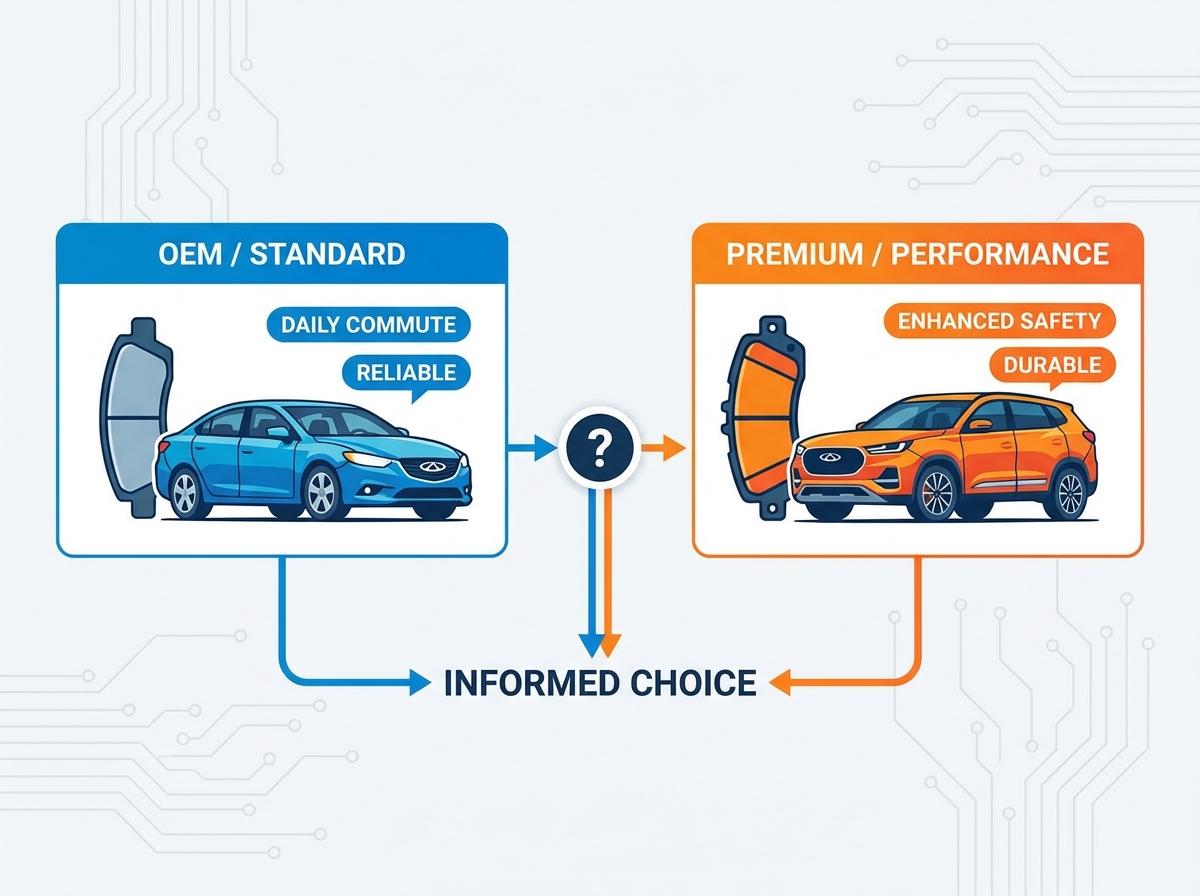
Punching your Chery model into auto parts databases often yields an overwhelming wall of results with zero context on performance tradeoffs. To solve this, you need an objective framework for evaluating OEM versus aftermarket options. By comparing material science and identifying required technical specifications, you can confidently purchase a high-performance brake pad for your vehicle.
Braking requirements differ significantly across the Chery lineup. A compact sedan like the Arrizo 5 generates far less kinetic energy during deceleration than a fully loaded Tiggo 8 Pro. Vehicle mass directly dictates the required friction coefficient of the brake pad. When you press the brake pedal, the hydraulic system clamps the pads against the rotor, converting kinetic energy into thermal energy. Heavier vehicles require a pad compound capable of generating higher friction levels to stop the vehicle within a safe distance without requiring excessive pedal effort from the driver.
Installing a pad designed for a lightweight sedan onto a three-row SUV results in a dangerous condition known as under-braking. The pad material will glaze over under the immense pressure and heat, leading to a hard pedal feel and extended stopping distances. Conversely, putting an aggressive, high-friction pad on a light sedan can make the brakes feel grabby and difficult to modulate in stop-and-go traffic. Matching the friction profile to the specific gross vehicle weight rating (GVWR) of your Chery model ensures predictable and safe deceleration.
Heat dissipation separates adequate brake pads from exceptional ones. During prolonged braking events, such as descending a steep mountain grade or navigating heavy stop-and-go traffic, the friction interface between the pad and rotor can exceed 600 degrees Fahrenheit. If the pad material cannot handle this thermal load, it begins to outgas. The resins and binding agents in the friction material vaporize, creating a microscopic layer of gas between the pad and the rotor. This phenomenon, known as green fade or outgassing, causes the brake pedal to feel spongy and drastically reduces stopping power.
Quality brake pads utilize advanced thermal management designs to combat fade. Many feature a central slot cut vertically through the friction material. This slot provides an escape route for hot gases and dust, keeping the pad surface clean and maintaining direct contact with the rotor. Additionally, the specific blend of metals, ceramics, and graphite in the pad compound determines its maximum operating temperature. Evaluating how different pads maintain their friction coefficient at elevated temperatures is a mandatory step for drivers who frequently carry heavy loads or drive in mountainous regions.
A brake pad does not operate in isolation; it is one component of a highly interdependent mechanical system. The pads must interact seamlessly with the OEM Chery rotors. Some premium Chery trims feature ventilated front rotors with internal cooling vanes, while rear rotors might be solid. The pad material must be compatible with the specific cast iron metallurgy of these rotors to prevent aggressive scoring or uneven wear.
Furthermore, the installation hardware is just as critical as the friction material itself. The brake caliper relies on stainless steel abutment clips to allow the pad to slide smoothly as it engages and retracts. If these clips are worn, rusted, or missing, the pad can bind in the caliper bracket, leading to dragging brakes and rapid, uneven wear. High-temperature silicone or molybdenum disulfide (moly) grease applied to the guide pins and pad contact points ensures the system operates without binding. A quality brake pad replacement always involves inspecting and replacing this supporting hardware.
Brake squeal is one of the most common complaints from drivers, and it is almost always a result of high-frequency vibrations transferring through the brake caliper and steering knuckle. Quality brake pads are engineered with specific features to mitigate NVH. Precision-cut backing plates ensure a tight fit within the caliper bracket, preventing the pad from rattling over bumps.
Chamfers—angled cuts on the leading and trailing edges of the friction material—are another critical NVH feature. They alter the frequency at which the pad vibrates as it initially contacts the rotor, pushing the sound out of the range of human hearing. Additionally, premium pads utilize multi-layer constrained-layer damping (CLD) shims attached to the backing plate. These shims act as a cushion, absorbing vibrations before they can resonate through the vehicle chassis. When evaluating a brake pad for Chery, the presence of chamfers, slots, and high-quality shims indicates a product designed for quiet operation.
Ceramic brake pads represent the modern standard for passenger vehicles. The friction material consists of a dense mixture of ceramic compounds, copper fibers, and proprietary bonding agents. The primary advantage of ceramic pads is their exceptional NVH performance; they are inherently quiet and produce a sound frequency that is largely imperceptible to the human ear. Furthermore, the dust generated by ceramic pads is light-colored and non-ferrous, meaning it will not stick to or corrode alloy wheels.
From a performance standpoint, ceramic pads offer a very stable friction coefficient across a wide range of normal operating temperatures. They provide a smooth, predictable pedal feel that is ideal for daily commuting. They are also highly rotor-friendly, causing minimal wear to the cast iron surface over tens of thousands of miles. However, ceramic compounds have limitations. They struggle to dissipate heat as effectively as metallic pads, making them susceptible to fade under extreme thermal loads, such as heavy towing or aggressive track use. They also exhibit slightly lower initial bite in extremely cold weather until they warm up. For the vast majority of Chery Arrizo sedans and Tiggo crossovers used for daily driving, ceramic pads are the optimal choice.
Semi-metallic brake pads are engineered for heavy-duty applications and high-performance driving. The friction compound contains anywhere from 30% to 70% metal fibers—typically steel, iron, and copper—mixed with graphite lubricants and binding resins. This high metal content gives semi-metallic pads an incredibly high thermal threshold. They excel at pulling heat away from the rotor surface, making them highly resistant to brake fade even during repeated, heavy deceleration.
The stopping power of a semi-metallic pad is superior to ceramic, particularly under heavy loads. They provide a strong initial bite and maintain consistent friction regardless of how hot the system gets. This makes them the preferred choice for fully loaded Chery Tiggo 8 models, vehicles used for towing, or drivers navigating steep mountainous terrain. The trade-offs for this performance are notable. Semi-metallic pads are more abrasive, leading to accelerated rotor wear. They also generate visible, dark, ferrous brake dust that requires frequent wheel cleaning. Finally, the high metal content makes them more prone to low-speed squeal and groaning noises.
Non-Asbestos Organic (NAO) brake pads are manufactured from a blend of glass, rubber, Kevlar, and high-temperature resins. Historically, these were the standard for older vehicles, but they have largely been phased out of modern OEM applications. Organic pads offer a very soft pedal feel and operate quietly under light braking conditions. They are also the least abrasive option, causing almost zero wear to the brake rotors.
However, the performance limitations of organic pads make them unsuitable for modern, heavy vehicles like the Chery Tiggo series. They have a rapid wear rate and degrade quickly under moderate to heavy use. Their high-temperature performance is poor; they glaze over and fade rapidly when subjected to the kinetic energy of a modern SUV. Furthermore, organic pads create a significant amount of heavy, sticky black dust. This dust can accumulate on caliper guide pins and abutment clips, causing the hardware to bind and leading to uneven pad wear. Due to these thermal and longevity limitations, organic pads are generally not recommended for any modern Chery vehicle.
| Friction Material | Primary Composition | Thermal Capacity | Dust Level | Ideal Chery Application |
|---|---|---|---|---|
| Ceramic | Ceramic compounds, copper fibers | Moderate to High | Low (Light colored) | Arrizo sedans, Tiggo 5x (Daily Commuting) |
| Semi-Metallic | Steel, iron, copper (30-70%) | Very High | High (Dark, ferrous) | Tiggo 8, Tiggo 7 Pro (Heavy loads, towing) |
| Organic (NAO) | Glass, rubber, Kevlar, resins | Low | High (Sticky, black) | Not recommended for modern applications |
Sourcing genuine Chery OEM brake pads provides absolute predictability. These pads are engineered specifically for the vehicle's factory braking system, taking into account the exact metallurgy of the OEM rotors, the clamping force of the calipers, and the vehicle's weight distribution. When you install an OEM pad, you are restoring the vehicle's braking performance to the exact specifications it had when it rolled off the assembly line.
Using genuine parts also ensures strict compliance with factory maintenance schedules and eliminates any potential disputes regarding vehicle warranty claims. The friction compound, shim design, and included hardware are guaranteed to fit perfectly without modification. For drivers who prioritize peace of mind and want a guaranteed factory-level pedal feel, OEM pads are the safest route, though they require sourcing directly from authorized dealership networks.
The premium aftermarket sector offers compelling alternatives to OEM pads. Top-tier manufacturers like Akebono, Bosch, Brembo, and Ferodo invest heavily in friction material research and development. In many cases, these companies actually manufacture the OEM pads for various automakers. By choosing a premium aftermarket pad, you can often access advanced friction formulas that exceed the original factory specifications in terms of dust reduction, fade resistance, or longevity.
When evaluating aftermarket options, technical verification is required. Look for ISO/TS 16949 certifications, which indicate the manufacturer adheres to strict automotive quality management standards. More importantly, check the DOT edge code stamped on the steel backing plate of the pad. This two-letter code (e.g., EE, FF, GG) represents the pad's coefficient of friction at cold and hot temperatures. An "FF" pad offers consistent friction across normal operating ranges, while a "GG" pad indicates a higher friction level suitable for heavy-duty use. Matching these codes to your driving requirements ensures you are getting a pad that performs as advertised.
The aftermarket is also flooded with substandard, unbranded brake pads that pose severe safety risks. One of the primary dangers of cheap pads is inconsistent bonding between the friction material and the steel backing plate. Under heavy thermal load, the adhesive can fail, causing the friction block to delaminate and separate entirely from the plate. This results in an immediate and catastrophic loss of braking power on that wheel.
Furthermore, budget pads routinely omit necessary installation hardware. They often arrive without abutment clips, high-quality constrained-layer shims, or electronic wear sensors. Reusing old, fatigued hardware guarantees NVH issues, uneven pad wear, and caliper binding. The friction material itself is often poorly mixed, leading to hard spots that aggressively score the brake rotor. Installing these inferior pads inevitably leads to premature rotor degradation, requiring a complete brake system overhaul long before the expected service interval.
Automotive production is complex, and automakers frequently make mid-year changes to brake caliper designs or rotor sizes. Relying solely on basic make, model, and year drop-down menus on auto parts websites frequently results in ordering the wrong parts. A Chery Tiggo 7 built in January might use a different caliper bracket than one built in November of the same year. Different regional factory variances and trim levels (e.g., standard vs. Pro models) further complicate fitment.
The only reliable method for verifying exact fitment is cross-referencing your Vehicle Identification Number (VIN) with the parts distributor's database. The VIN dictates the exact build sheet of your specific vehicle. Additionally, you must verify that the selected pad set includes the correct auxiliary components. If your Chery model features an electronic dashboard warning system for brake wear, the new pads must include the compatible electronic wear sensors. Ensuring the kit includes new anti-rattle clips and abutment hardware is equally critical for a successful installation.
Installing the pads into the caliper is only the first step; the brake system is not fully functional until the pads are properly bedded. Bedding-in, or burnishing, is the critical post-installation procedure of transferring an even, microscopic layer of friction material onto the face of the brake rotor. This transfer layer is what actually generates the friction required to stop the vehicle smoothly.
Failing to execute a proper bedding procedure leads to uneven pad deposits on the rotor surface. As the rotor spins, these high spots catch the brake pad, causing a severe vibration that transfers through the steering wheel. Drivers and mechanics frequently misdiagnose this steering wheel judder as a "warped rotor," when in reality, it is simply uneven friction material transfer. A standard bedding process involves a series of controlled, moderate decelerations from 45 mph down to 10 mph, allowing the brakes to heat up gradually without coming to a complete stop, followed by a cooling period.
New brake pads require a smooth, flat surface to bed correctly. Installing premium pads onto heavily scored, thinned, or grooved rotors completely negates the engineering of the new pads. The uneven rotor surface will chew through the new friction material, preventing a proper transfer layer from forming and guaranteeing squealing noises.
During installation, a thorough rotor inspection is mandatory. Use a micrometer to measure the rotor thickness and compare it to the minimum thickness specification stamped on the rotor hat. Check for deep grooves, heavy rust scaling on the venting vanes, and lateral runout. If the rotor is above the minimum thickness but has surface irregularities, it must be resurfaced (turned) on a brake lathe to restore a flat finish. If the rotor is near or below the minimum thickness, or exhibits severe runout, it must be replaced entirely alongside the new brake pads to ensure optimal friction coefficients and safe operation.
A: OEM brake pads on a Chery SUV typically last between 30,000 and 70,000 miles. This lifespan depends heavily on friction material, driving habits, and whether you drive mostly in urban or highway environments. High-quality aftermarket ceramic options can easily cross the 70,000-mile milestone if properly bedded and maintained.
A: It depends on your specific driving requirements. Ceramic pads are superior for low noise and minimal dust during standard daily driving. Semi-metallic pads offer superior heat dissipation and fade resistance, making them the better choice for heavy loads, towing, and steep mountain descents.
A: Squeaking is usually caused by high-frequency vibrations. Common culprits include a lack of high-temperature silicone paste on the backplate, missing or reused worn shims, or failure to replace fatigued guide clips. An improper bedding-in process or installing new pads on glazed rotor surfaces also causes excessive noise.
A: No, rotors only require replacement if they measure below the manufacturer's minimum thickness specifications, are heavily scored, or exhibit severe lateral runout. However, resurfacing or replacing them ensures a perfectly flat mating surface, which maximizes the lifespan and performance of your new pads.
A: Standard automotive warranty regulations dictate that using aftermarket maintenance parts does not automatically void the vehicle warranty. The manufacturer can only deny a warranty claim if they can definitively prove that the specific aftermarket part caused direct damage to the surrounding braking system components.
A: Inspect the steel backing plate for a stamped DOT edge code, which verifies its friction rating. Check the packaging for the manufacturer’s branding and security holograms. Ensure the box includes a complete hardware kit with new clips and shims, and always source parts from reputable automotive distributors.


