


Views: 0 Author: Site Editor Publish Time: 2026-11-19 Origin: Site


Replacing or upgrading a fender on your Chery shouldn't be a guessing game of fitment and finish. You need reliable parts for seamless repairs. A mismatched panel immediately draws unwanted attention and ruins the sleek profile of your car.
Whether dealing with collision repair on a Tiggo SUV or adding protective fender flares to an Omoda, choosing the right fender impacts vehicle aesthetics, aerodynamics, and resale value. You want a replacement panel integrating perfectly into existing body lines. Finding exact-match components ensures optimal safety and maintains structural integrity.
This guide breaks down the structural differences, material durability, and fitment realities of sourcing a Fender for Chery vehicles to help you make an evidence-based purchasing decision. We explore OEM versus aftermarket options and detail model-specific nuances. You will discover actionable tips for flawless installation and precise paint matching.
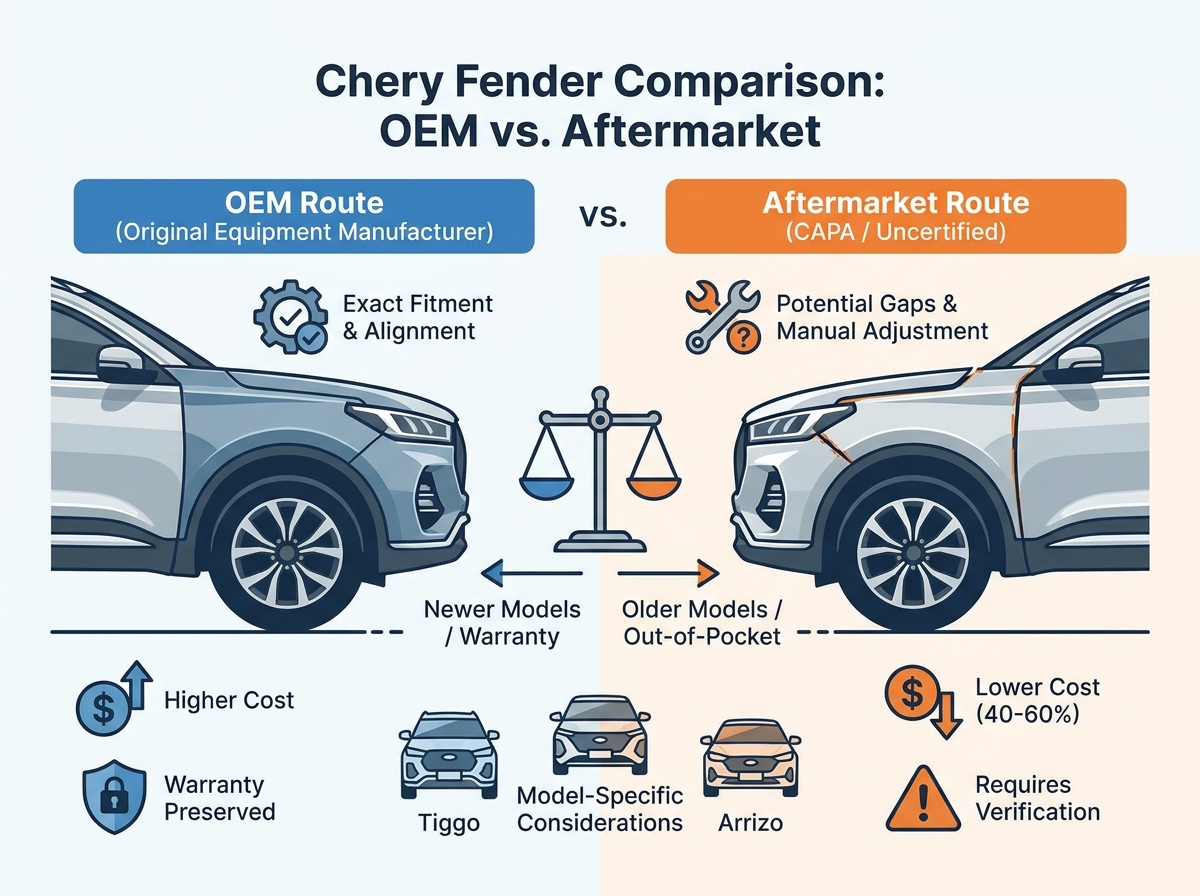
Choosing between factory originals and third-party replacements defines the trajectory of your entire repair project. You must weigh upfront savings against potential installation headaches. Every collision center handles these two categories differently. Understanding their distinct characteristics helps you manage expectations and budget accurately.
Purchasing an OEM fender means you receive the exact panel installed on your Chery at the assembly line. These parts utilize original factory molds. They feature factory-spec crash compliance and precise metal thickness.
The primary advantage is exact mounting point alignment. The boltholes line up flawlessly with your vehicle's internal chassis structure. This preserves your vehicle warranty and safeguards your resale value. Buyers rarely worry about uneven gaps around the hood or front doors. However, this perfection comes at a higher upfront cost. You also remain subject to regional supply chain delays. Dealership networks sometimes wait weeks for imported body panels.
Aftermarket panels divide into certified and uncertified tiers. Certified panels, such as those bearing a CAPA (Certified Automotive Parts Association) seal, undergo rigorous dimension testing. They offer a reliable middle ground. Uncertified aftermarket panels present more risk.
The main benefit here is cost. You can find aftermarket components up to 40-60% cheaper than dealership prices. Third-party distributors typically offer much faster availability. The downside involves installation labor. Uncertified molds often require manual manipulation. Body shops frequently use heat bending or physical leverage to achieve acceptable panel gaps. This extra labor quickly consumes the money you saved on the part itself.
Use OEM parts for newer models still under warranty. Leased vehicles almost always require OEM parts to avoid lease-end penalties. Opt for high-tier, certified aftermarket options if you are repairing older models out of pocket. For example, replacing a quarter panel on an early generation Arrizo makes more financial sense using a certified aftermarket part.
| Feature | Genuine OEM | CAPA Certified Aftermarket | Uncertified Aftermarket |
|---|---|---|---|
| Fitment Accuracy | Exact match, seamless gaps | Very close to factory specs | Often requires modification |
| Price Point | Premium / Highest | Moderate (20-30% savings) | Lowest (40-60% savings) |
| Availability | Subject to dealer backorders | Usually fast via local hubs | Immediate via online stores |
| Warranty Impact | Maintains factory warranty | Varies by manufacturer terms | May void adjacent part warranties |
Fenders are not just cosmetic skins. They serve as critical components for aerodynamics, debris deflection, and crash safety. You must scrutinize the materials used in your replacement parts. Substandard materials lead to premature degradation and safety risks.
Automakers frequently use plastic composites for fender flares, wheel arch moldings, and inner fender liners. These components endure constant bombardment from road salt, gravel, and water.
When evaluating aftermarket plastic components, you must look for UV-resistant coatings. Lower-grade plastics lack proper UV stabilizers. This causes early fading, known in the industry as chalking. The black plastic turns a milky grey after just one summer in a harsh climate. You should physically inspect the flexibility of the plastic. Brittle polypropylene shatters upon minor impacts, whereas high-quality ABS bends and returns to its shape.
Primary front quarter panels require stamped steel. This metal houses your headlights and forms the structural bridge between the front bumper and the doors.
Your main evaluation criterion here is the gauge of the steel. Inferior aftermarket fenders use thinner steel to cut shipping weights and manufacturing costs. This thin metal is highly prone to denting from minor door dings or heavy hail. Furthermore, you must check the e-coat primer. Factory panels come bathed in a resilient electrostatic anti-corrosion primer. Cheap replacements feature a thin, spray-on black primer. If a rock chip compromises this thin layer, rapid oxidation and rust will follow.
Modern vehicles engineer fenders to absorb kinetic energy. Ensure the replacement part meets local crash safety standards. Pedestrian impact crumple zones rely on the fender buckling at specific pressure points. Using an overly rigid or poorly stamped aftermarket fender can alter these safety dynamics, increasing injury risks during a collision.
Chery features a diverse lineup. The engineering tolerances vary wildly between their utilitarian sedans and their design-forward SUVs. You cannot apply a one-size-fits-all mentality when sourcing body panels for different models.
The Tiggo SUV lineup dominates Chery's modern offerings. These vehicles utilize robust, layered designs around the wheel wells.
Replacing a fender on a Tiggo requires absolute precision around the wheel arch molding integration. The steel fender contains specific mounting holes for the plastic exterior flares. Minor deviations in the fender structure will cause the plastic flares to pop off their retaining clips. You might get the metal panel bolted to the chassis perfectly, only to find the plastic trim refuses to sit flush.
The Omoda 5 breaks traditional design rules. It features complex, aggressive body lines and deep creases that reflect light dynamically.
Aftermarket stamping machines struggle immensely with the sharpness of these creases. When an uncertified factory attempts to replicate the Omoda's side profile, the resulting folds often look rounded. We highly recommend using OEM parts here. An inferior panel creates a "soft" or warped look under direct sunlight. This visual distortion instantly betrays the fact that the car was involved in an accident.
The Arrizo sedans employ more traditional, standardized body-on-frame architectures. Their smoother side profiles make them easier to replicate.
Standardized fitment makes aftermarket options more viable for the Arrizo line. However, you must pay close attention to the headlight housing bracket alignment. The sharp inward curve where the fender meets the front headlamp is a common failure point for cheap molds.
Buying the part is only the first step. The true challenges emerge during preparation and installation. Many car owners severely underestimate the chemical and mechanical complexities involved in hanging a new body panel.
Many online vendors advertise "pre-painted to match" panels. You must warn buyers against this trap. Factory paint codes vary slightly by batch on the assembly line. More importantly, the existing paint on your vehicle has likely oxidized and faded from sun exposure.
If you bolt a brand-new, factory-fresh painted fender onto a three-year-old Chery, the color difference will be glaringly obvious. Silver and pearl-white finishes are notoriously difficult to match. Professional body shops never paint a fender in isolation. They employ a technique called "blending." They spray the new fender, then lightly feather the new paint into the adjacent front door and hood. This creates an optical illusion of a seamless finish. Buying pre-painted parts bypasses this crucial step.
Never reuse old hardware. During a collision, plastic retaining clips absorb stress and stretch. Even if they look intact, old plastic clips lose their elasticity and holding power.
Reusing them usually results in rattling at highway speeds. A qualified purchase must include a new OEM-spec clip kit. You need the exact nylon rivets and push-pins designed for your specific Chery chassis. Using generic auto-store clips often leads to loose fender liners that rub against the front tires during tight turns.
Installation economics can trick you. A cheaper aftermarket panel often looks like a bargain online. However, an uncertified part might require extensive manipulation.
If a body shop technician spends three hours grinding edges, drilling new holes, and applying body filler to make a cheap panel fit, their labor rate destroys your savings. A drop-in OEM part takes minimal time to align. You must factor the mechanic's hourly rate into your purchasing equation. Sometimes, the expensive part yields a cheaper overall repair bill.
Protecting your wallet requires a holistic view of the repair process. You need a strategy for identifying reputable suppliers who understand the nuances of imported vehicle platforms.
Do not base your decision solely on the raw part price. You must compare the total installed cost. This formula includes the part price, freight shipping, prep and primer materials, paint blending, and physical labor.
A reputable vendor providing a high-quality Fender for Chery will save you money in the paint booth. Panels that arrive with thick, durable e-coats require less sanding and less expensive high-build primer. Calculate the entire process before handing over your credit card.
Finding a reliable distributor separates a smooth repair from a logistical nightmare. Auto body parts are large, awkward, and easily damaged in transit.
First, check the vendor's return policies on freight items. Shipping a bent or damaged fender back to a warehouse is notoriously difficult and expensive. You want a vendor who guarantees safe transit and covers return freight for damaged goods.
Second, look for vendors that provide detailed part numbers mapping directly to Chery's OEM catalog. They should ask for your Vehicle Identification Number (VIN) to verify fitment before shipping.
The internet is full of generic auto parts dropshippers. You must learn to spot unreliable listings instantly to protect your vehicle.
Selecting the right fender for Chery models requires balancing the upfront part cost against downstream labor and paint-matching realities. While aftermarket options present tempting initial savings, the structural complexities of modern vehicles often justify the premium of factory originals. Proper fitment dictates the safety, aesthetics, and aerodynamic integrity of your car.
Prioritize CAPA-certified or genuine OEM panels for primary structural fenders. You must budget appropriately for professional paint blending to maintain the vehicle's seamless factory appearance. Avoid the temptation of pre-painted online bargains that ignore real-world paint oxidation.
Before making any purchase, locate your vehicle's VIN and exact paint code on the driver's side door jamb. Armed with this data, contact regional distributors or local body shops for comprehensive quotes that include freight and alignment labor.
A: Using an aftermarket fender generally does not void the entire vehicle warranty. However, Chery will not cover corrosion, paint failure, or adjacent part failure caused by the aftermarket panel. If the third-party part causes a sensor malfunction, you bear the repair costs.
A: While bolting on a fender is mechanically straightforward, aligning the panel gaps with the hood and doors without chipping the paint requires specialized tools and two people. Home installations often result in uneven gaps or scratched edges.
A: The most accurate method is to call a Chery dealership parts department with your VIN. Mid-year facelifts frequently change mounting bracket locations, so visual identification alone is never sufficient for ordering body panels.
A: No. Despite similar exterior styling, the wheel arch radius, curvature depths, and clip retention slots differ between the models. Attempting to force a Tiggo 7 flare onto a Tiggo 8 will result in broken clips and loose trim.


