


Views: 0 Author: Site Editor Publish Time: 2026-08-09 Origin: Site


When you hear a heavy clunking sound over speed bumps, feel the steering wheel vibrate at highway speeds, or notice the inner edge of your front tires wearing down to the metal cords in under 15,000 miles, your suspension system is failing. These mechanical symptoms point directly to a compromised lower or upper suspension link. Ignoring this wear puts vehicle safety at risk, destroys new tires rapidly, and guarantees recurring labor expenses. Selecting substandard replacement parts only resets the clock for another premature failure.
Finding the correct Control Arm for Chery vehicles requires looking beyond the initial purchase. You need a comprehensive framework to evaluate replacement parts, focusing heavily on material construction, bushing durometer, and long-term reliability. This guide provides the technical specifications required to ensure your next suspension repair restores factory geometry, eliminates unwanted noise, and delivers lasting performance under daily driving conditions.
Physical evidence of failure presents itself clearly through specific auditory and tactile feedback. Metal-to-metal contact sounds when navigating uneven pavement and wandering steering at highway speeds are primary indicators. You will also see extreme tire wear patterns. Rapid inside-edge tire wear can destroy a brand-new set of tires, wearing them down to the steel belts within just a few months of driving. When the rubber bushing degrades, the metal sleeve contacts the outer shell, creating the audible clunk. This deflection allows the wheel to shift backward under braking, dynamically altering the toe angle and scrubbing the tire across the pavement.
Mechanics often look for dry rot, deep cracks, or complete separation of the rubber from the metal sleeve. If you can take a pry bar to the suspension joint and move it more than a few millimeters, the component has failed. Fluid leaking from a hydro-bushing is another definitive sign that replacement is mandatory.
Sometimes the first warning comes directly from the alignment rack. If a technician states they cannot bring the vehicle within factory specifications, pay close attention. This inability to align the vehicle points directly to worn ball joints or deflected bushings that shift under load, making precise geometry impossible. When the eccentric bolts are maxed out but the camber or caster remains out of specification, the structural integrity of the suspension link is compromised.
Alignment machines measure down to the hundredth of a degree. A worn pivot point introduces dynamic play. The vehicle might sit perfectly static on the slip plates, but the moment driving torque or braking force is applied, the wheel shifts out of alignment. This dynamic toe change is what causes the vehicle to dart over road imperfections.
Differentiating between specific component failures saves time and prevents unnecessary parts replacement. A failed ball joint typically produces a sharp popping or creaking noise when turning the steering wheel at low speeds. A torn bushing usually causes a dull clunk during hard braking or acceleration as the arm shifts forward and backward in its mount. Meanwhile, a structurally compromised or bent metal frame—often the result of road impacts, deep potholes, or sliding into a curb—will cause an immediate and severe pull to one side.
To isolate the issue, raise the vehicle and support it safely. Grasp the tire at the 12 and 6 o'clock positions and rock it. Excessive play here often indicates a bad ball joint or wheel bearing. Grasping at 9 and 3 o'clock tests the tie rods, but can also reveal lower pivot wear. Visual inspection remains the most reliable method for identifying torn rubber.
A successful repair involves more than just swapping a piece of metal. The goal is restored factory alignment geometry, complete elimination of Noise, Vibration, and Harshness (NVH), and long-term component durability. Achieving this requires selecting a high-quality replacement that matches the original engineering standards. The steering wheel should be perfectly centered, the vehicle should track straight on a flat road, and the suspension should absorb impacts without transmitting harshness into the cabin.
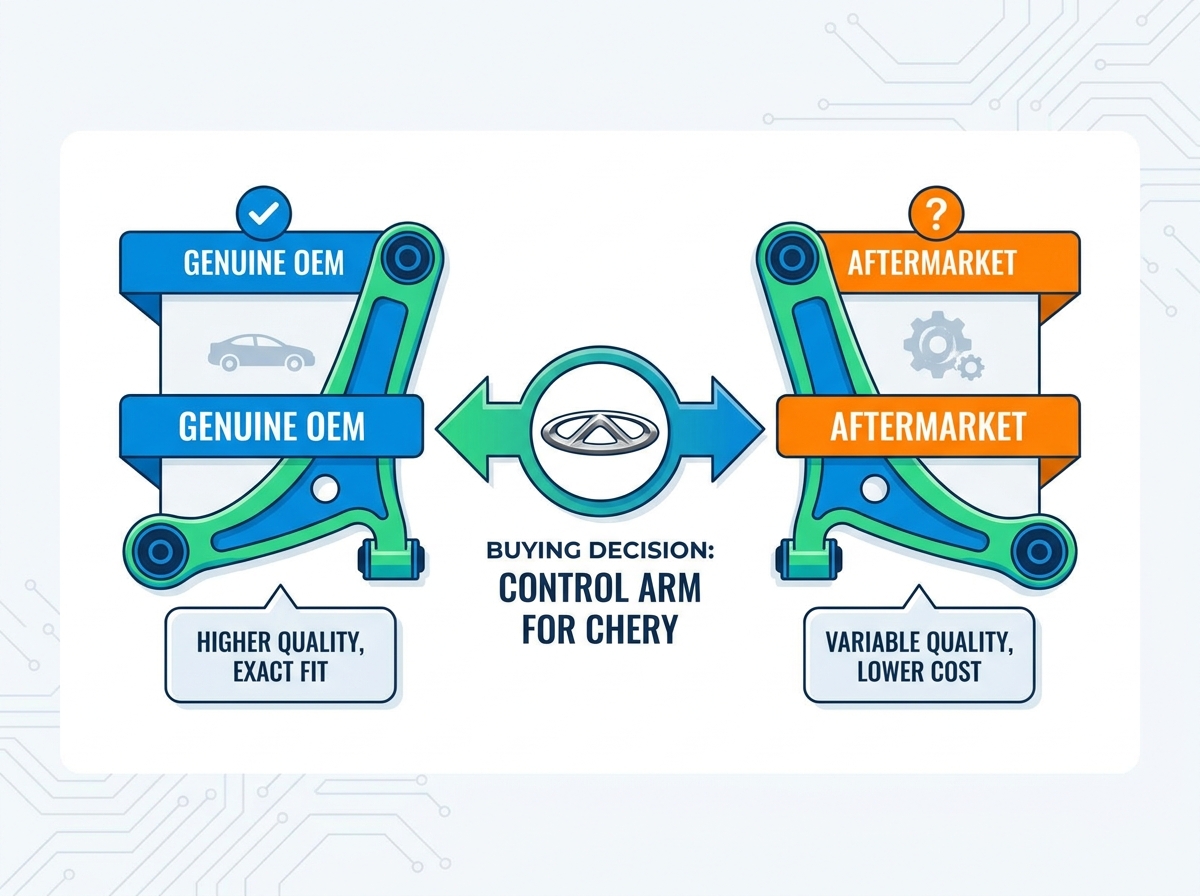
Genuine OEM parts offer guaranteed fitment, baseline factory ride quality, and a predictable lifespan. You know exactly what you are getting because it matches the part installed on the assembly line. The rubber durometer is tuned specifically for the vehicle's weight and intended ride characteristics. However, they come with a higher initial outlay and may face availability constraints depending on your local dealership network.
Using OEM components ensures that the crash safety standards engineered into the vehicle remain intact. In the event of a severe impact, factory arms are designed to bend and absorb energy rather than snapping and sending the wheel assembly into the passenger cabin.
The aftermarket presents a wide variance in quality. Premium aftermarket brands often meet or exceed OEM specifications, providing excellent value and durability. They may even re-engineer known weak points from the factory design, such as upgrading a standard rubber bushing to a solid or cross-axis joint. Conversely, budget white-label alternatives might use inferior rubber that degrades rapidly or weaker metals that flex under heavy cornering loads.
| Feature | Genuine OEM | Premium Aftermarket | Budget Aftermarket |
|---|---|---|---|
| Fitment Accuracy | Exact match | Excellent | Variable, may require modification |
| Bushing Quality | Factory tuned rubber | High-grade rubber or Polyurethane | Low-grade synthetic rubber |
| Metal Strength | Standard factory spec | Often reinforced or forged | Thinner stamped steel |
| Ball Joint Type | Sealed, non-greasable | Often greasable/serviceable | Sealed, low-quality boot |
In certain scenarios, adjustable arms become necessary. If you are correcting camber or caster after suspension modifications, or addressing chronic alignment drift from a slightly tweaked subframe, adjustable options provide a mechanical solution. Control arms with adjustable attachment points at the frame or threaded ball joint receivers allow for precise fine-tuning of the suspension geometry.
These are particularly useful for vehicles that carry heavy loads frequently, altering the static ride height. By adjusting the arm length, technicians can bring the tire contact patch back to flat, ensuring even wear and predictable handling.
Suspension links are typically manufactured from stamped steel, cast iron, or forged aluminum. Aluminum offers unsprung weight reduction, improving handling response and allowing the shock absorber to control wheel movement more effectively. Steel and cast iron provide superior impact resilience and are generally more forgiving of pothole strikes. The right choice depends on your specific model's original design.
OEM-style rubber bushings are best for daily driving because they absorb vibration and ensure quiet operation. The voids cast into the rubber allow for specific directional compliance, absorbing harsh impacts. However, they are susceptible to environmental degradation from ozone, road salt, and engine oil leaks. Polyurethane bushings offer stiffer handling and longer life, but they increase harshness and require periodic lubrication with specialized synthetic grease to prevent severe squeaking.
Evaluate whether the arm features integrated, non-serviceable ball joints or press-in, replaceable joints. Integrated joints require replacing the entire arm when the internal bearing wears out. Regardless of the type, inspect the boot quality. Neoprene or silicone boots generally outlast standard rubber in sealing out moisture and road grime. A high-quality boot prevents the internal grease from washing away and keeps abrasive dirt out of the polished ball stud.
Rust destroys structural integrity over time. Assess the importance of e-coating, powder coating, or anodizing on the replacement part. High-quality coatings are vital to prevent rust, particularly for vehicles operating in wet, humid, or road-salt-heavy climates. Bare steel or thinly painted budget arms will begin to surface rust within months, eventually leading to pitting and structural failure at the weld seams.
Reusing old mounting bolts is a critical failure risk. Many modern suspension systems use torque-to-yield hardware that stretches permanently upon initial installation to provide a precise clamping force. Replacing hardware is standard practice to ensure the new arm remains securely fastened under heavy dynamic loads. Reusing stretched bolts can lead to them backing out or snapping over bumps.
Tightening pivot bolts while the vehicle is hanging on a lift will destroy the new bushings instantly. You must follow the mechanical necessity of tightening these bolts only when the vehicle's suspension is under its natural resting load. This prevents immediate bushing bind.
Replacing a suspension link fundamentally alters geometry. A professional four-wheel alignment is non-negotiable immediately after installation to ensure safe handling and prevent rapid tire wear. Even if the new part is identical to the old one, manufacturing tolerances and the removal of the worn, sagging bushing will change the toe and camber angles significantly.
The optimal suspension replacement balances structural integrity with high-quality, application-appropriate pivot points. For standard daily commuters, premium assemblies with factory-spec rubber offer the best mix of comfort and longevity. Fleet vehicles or those in harsh environments benefit from heavy-duty coated metals with upgraded, sealed joints.
A: It depends on the specific design. Some allow for press-in replacements, while others have integrated components. Replacing the entire loaded assembly is often more efficient due to the high labor time required to press out old, rusted parts.
A: Yes, it is highly recommended. If one side has failed due to wear, the other side has experienced the exact same mileage and road conditions and is likely near the end of its service life.
A: Delaying replacement leads to rapid, uneven tire wear, compromised steering control, and unpredictable handling. In extreme cases, a completely failed ball joint can cause the wheel assembly to detach from the vehicle entirely.
A: Worn bushings or bent metal prevent the suspension from holding the correct geometry. The shop cannot adjust the alignment within factory specifications if the underlying components shift dynamically under load.
A: Yes. Any time you replace a major structural component, the geometry changes. Skipping the alignment will result in poor handling, an off-center steering wheel, and rapid tire degradation.
A: Under normal driving conditions, factory components typically last between 60,000 and 100,000 miles. Harsh environments, frequent heavy loads, or severe road impacts can significantly reduce this expected lifespan.


