


Views: 0 Author: Site Editor Publish Time: 2026-11-04 Origin: Site


Suspension sagging, sudden clunking noises, or unpredictable handling bring immediate safety and drivability concerns to any Chery vehicle. When these symptoms appear, you cannot ignore them. Replacing a damaged coil spring serves as a standard but highly critical maintenance procedure. Your final repair costs will fluctuate significantly. Prices shift based on your specific Chery model—whether you drive a nimble Arrizo sedan or a heavier Tiggo series SUV. Local labor rates and how you source your parts also heavily impact the final bill.
This guide delivers a transparent, evidence-based breakdown of parts, labor expectations, and hidden fees. You will learn exactly how to identify failing suspension components and confidently navigate mechanic quotes. By the end, you will have the knowledge to make an informed repair decision to safely get your vehicle back on the road.
Before you take your vehicle to a repair shop, you should understand the physical symptoms of a failing spring. Framing this problem correctly helps you validate the need for a replacement. It also prevents mechanics from upselling unnecessary suspension work. Coil springs endure massive amounts of kinetic energy every day. Over time, metal fatigue sets in, severely compromising their structural integrity.
One of the most obvious signs of a failing spring is visible sagging. You might notice your Chery sitting lower on one side. To verify this, park your vehicle on level ground. Measure the gap between the top of the tire and the edge of the wheel arch. Compare the measurements from the left side to the right side. A discrepancy of more than half an inch usually indicates severe metal fatigue. A sagging suspension alters your vehicle's center of gravity. This imbalance forces other suspension components to work harder, leading to premature wear across the entire axle.
You should also listen closely while driving. A snapped spring coil often produces distinct, audible clunking or grinding noises. When a coil breaks, the sharp, jagged edge can rub directly against the strut body or the chassis. You will typically hear this metal-on-metal sound when driving over speed bumps, navigating potholes, or making tight turns. Ignoring this noise is dangerous. The broken coil can shift out of its seat and puncture the inner sidewall of your tire while you are driving.
You must treat spring replacement as a critical safety requirement rather than cosmetic maintenance. Compromised springs drastically reduce your ability to control the vehicle. You will likely experience increased body roll when cornering. Your braking distance will also extend because the front end dives excessively during hard stops. Overall vehicle stability diminishes, especially at highway speeds. A reliable Coil Spring for Chery ensures that your tires maintain constant contact with the road, providing the traction necessary for safe driving.
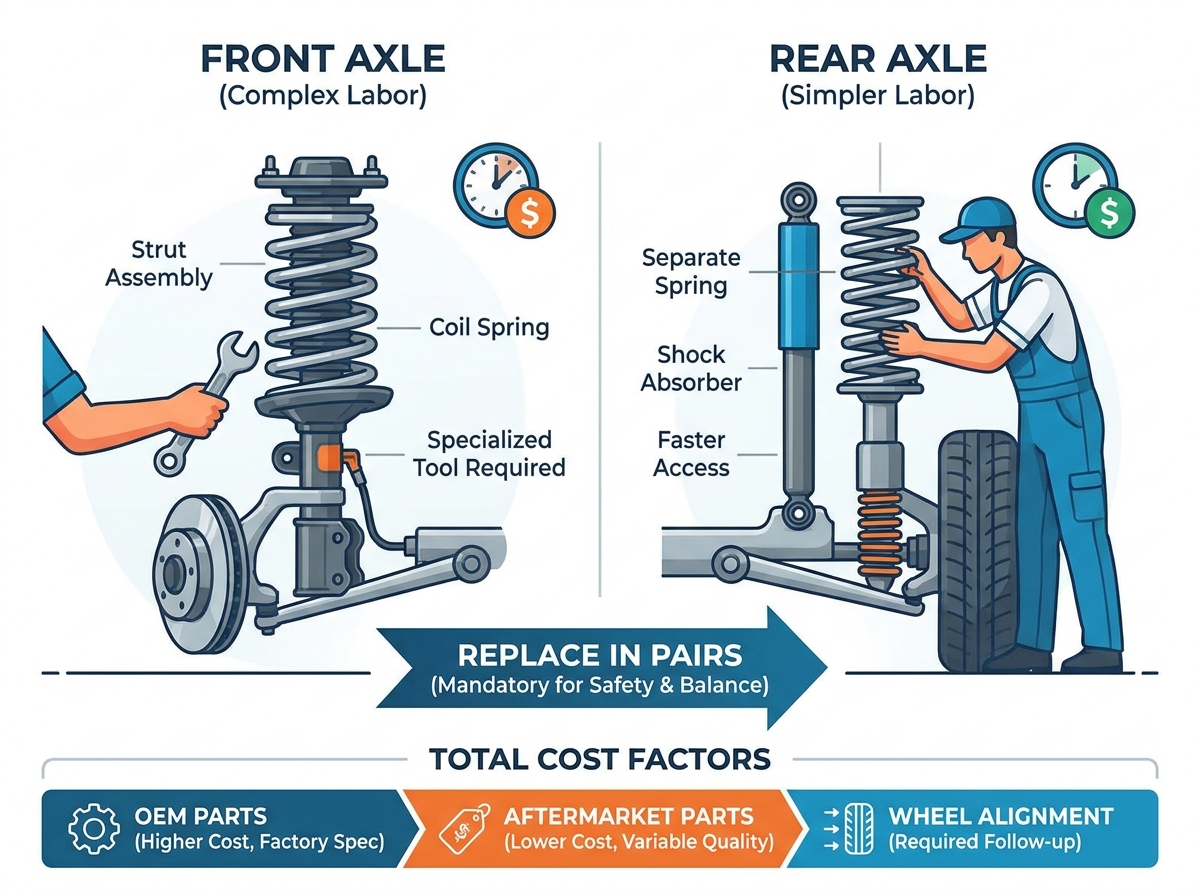
Demystifying mechanic quotes requires you to separate the invoice into tangible components. When you understand the distinct solution categories, you can spot overcharges and negotiate better rates. The total cost splits roughly down the middle between the physical parts and the labor required to install them.
The raw parts for a coil spring replacement are relatively affordable, but they vary by vehicle type. You can expect standard estimated price brackets for the springs themselves to range from $50 to $150 per pair. Heavier SUV models, like the Chery Tiggo 7 or Tiggo 8, require springs with significantly higher load ratings. These heavy-duty springs use thicker steel and undergo different tempering processes. Consequently, they marginally increase part costs compared to the lighter springs used in compact sedans like the Arrizo.
Labor charges will form a substantial portion of your final bill. Most automotive shops use standard industry book times to calculate labor. You should expect the mechanic to quote 1.5 to 3 hours of labor per axle. The exact time depends heavily on which end of the vehicle requires repair.
Front vs. Rear Differences: Front springs usually require removing the entire MacPherson strut assembly. Once the mechanic removes the strut from the vehicle, they must compress the spring using specialized, heavy-duty equipment before safely removing the top mount. This complex disassembly drives up labor hours. Conversely, rear springs on many Chery models sit completely separate from the shock absorber. Mechanics can often swap rear springs much faster, which reduces the associated labor costs.
| Expense Category | Compact Sedans (e.g., Arrizo) | SUV Models (e.g., Tiggo series) |
|---|---|---|
| Parts (Pair of Springs) | $50 - $90 | $80 - $150 |
| Labor (1.5 - 3 hours) | $120 - $200 | $150 - $250 |
| Wheel Alignment | $75 - $100 | $85 - $150 |
| Estimated Total | $245 - $390 | $315 - $550 |
When selecting parts, you must choose between Original Equipment Manufacturer (OEM) parts and aftermarket alternatives. You should compare these two primary sourcing routes based on quality, cost, and overall performance outcomes.
Purchasing an OEM Coil Spring for Chery means you are buying the exact same part that came installed on the vehicle from the factory.
The aftermarket ecosystem offers a wide variety of third-party suspension components. These range from budget-friendly replacements to specialized performance upgrades.
We recommend choosing OEM parts for newer vehicles still under warranty or for owners who strictly prioritize a plush, factory-quality ride. Conversely, you should explore reputable aftermarket brands for older models where cost-efficiency is your primary goal. Ensure you select well-reviewed aftermarket brands to avoid poor metallurgy and rapid sagging.
Vehicle suspension work frequently uncovers secondary problems. You must highlight these secondary costs in your budget so they do not surprise you during the repair process. The undercarriage faces constant exposure to road debris, moisture, and intense physical stress.
You need specific criteria for selecting a qualified mechanic to handle your Chery suspension work. Suspension repairs dictate how safely your vehicle performs at high speeds, so you cannot compromise on technical competence.
When shortlisting local shops, ask targeted questions. First, ask if they have specific experience with Chery vehicles or similar import platforms. Understanding the nuances of import suspension setups ensures a smoother repair. Second, confirm if their written quote includes the mandatory post-installation wheel alignment. Some shops leave this out to make their initial quote look cheaper, only to surprise you with the alignment cost later.
We must address the DIY audience with a strict safety caveat. A compressed coil spring stores extreme kinetic energy. It holds up a vehicle weighing thousands of pounds. If you release that energy improperly, the spring becomes a deadly projectile. We strongly warn against using cheap, low-quality "widow-maker" hand tools or basic clamp-style spring compressors. Because of the lethal risks involved, this specific job is best left to professionals. Qualified mechanics utilize heavy-duty, wall-mounted compression equipment and safety cages to swap springs safely. If you lack this specialized equipment, do not attempt this repair in your driveway.
Replacing a failing coil spring is a standard and moderate expense that directly restores the safety and drivability of your Chery vehicle. You must prioritize this repair the moment you notice sagging, uneven ride height, or metallic clunking over bumps. Attempting to cut corners by replacing only one side creates a dangerous imbalance, and skipping the post-repair alignment will ruin your tires. Investing in the correct parts and labor now saves you from catastrophic suspension failures and higher costs in the long run.
Your next step is simple and actionable. Walk out to your vehicle today and visually inspect the ride height on level ground. If you suspect an issue, reach out to at least two local, certified repair shops. Request an itemized quote that clearly separates the cost of the parts, the projected labor hours, and the final wheel alignment. Comparing these detailed quotes ensures you get a fair price for a professional, safe repair.
A: No. It poses a severe safety risk, can puncture a tire, and will cause cascading damage to the strut and suspension linkages.
A: Yes. Replacing just one creates an imbalance in spring tension, leading to unpredictable handling and uneven tire wear.
A: Generally 80,000 to 100,000 miles, though this is highly dependent on road conditions, vehicle load, and climate/corrosion factors.
A: While a "loaded strut" costs more in parts, it significantly reduces labor time and replaces the aging shock absorber simultaneously, often making it the better long-term value.


