


Views: 0 Author: Site Editor Publish Time: 2026-08-06 Origin: Site


Engine longevity and interior air quality depend heavily on a component that costs less than a tank of fuel. Yet, improper filter selection remains a leading cause of premature engine wear and HVAC inefficiency. Every time you drive, your engine ingests thousands of gallons of air, and your cabin pulls in exhaust fumes, pollen, and road dust. If the barrier protecting these systems fails, the internal damage is often irreversible.
The automotive aftermarket is saturated with conflicting claims about airflow, filtration efficiency, and reusable media. Buyers struggle to balance the need for maximum particulate trapping with optimal airflow, while also navigating complex fitment catalogs. Choosing a filter based solely on marketing promises rather than technical specifications often leads to poor performance or catastrophic engine dusting.
This guide breaks down the technical specifications of filter media, compares OEM against aftermarket options, and provides a strict evaluation framework for selecting the correct cabin and engine air filter for Great Wall Motor (GWM) platforms and other modern vehicles.
The primary function of an engine filter is to prevent silica, road debris, and particulates from entering the combustion chamber and scoring cylinder walls. Internal combustion requires massive volumes of clean oxygen. When abrasive particles bypass the intake system, they mix with engine oil. This creates a grinding paste that rapidly wears down piston rings, cylinder liners, and turbocharger compressor blades. Mechanics see this constantly on job sites where equipment runs in heavy dust without proper filtration.
The success metric for these components relies on high dirt-holding capacity (DHC) and a micron rating capable of trapping particles as small as 5-10 microns. This must be achieved without triggering a pressure drop that starves the turbo or throttle body. Engineers measure this performance through adherence to ISO 5011 testing standards. This global standard evaluates initial restriction, cumulative filtration efficiency, and total dust-holding capacity under controlled laboratory conditions. You want a filter that holds a massive amount of dirt before it chokes the engine.
For utility and 4x4 vehicles, filters must withstand high moisture environments and resist collapse under high-induction load during towing or off-roading. Trucks operating in heavy dust require media that will not deform when restricted. If the media collapses, the polyurethane seal pulls away from the airbox housing, allowing raw, unfiltered air straight into the intake manifold.
Cabin filters serve an entirely different purpose. They filter incoming air through the HVAC system to remove pollen, dust, exhaust soot, and odors before they reach the driver and passengers. Modern vehicles rely on these components to maintain interior air quality and keep the evaporator core free of debris. A clogged evaporator core leads to poor AC performance and expensive dash-out repairs.
Success metrics here focus on MERV or HEPA rating compliance, minimal impact on blower motor load, and effective neutralization of VOCs (Volatile Organic Compounds) if using carbon-activated variants. A restricted cabin filter forces the blower motor to work harder. This increased electrical resistance overheats the blower motor resistor, eventually causing complete failure of the climate control fan.
| Filter Type | Primary Contaminant Target | Typical Micron Rating | Failure Consequence |
|---|---|---|---|
| Engine Intake | Silica, Sand, Road Debris | 5 - 20 Microns | Cylinder scoring, turbo damage, oil contamination |
| Standard Cabin | Pollen, Large Dust, Leaves | 10 - 30 Microns | Blower motor failure, clogged evaporator |
| HEPA Cabin | Exhaust Soot, Fine Allergens | 0.3 Microns | Reduced HVAC airflow if not changed regularly |
Cellulose media consists of dense, randomly arranged fibers that trap dirt on the surface. This is the standard material used in factory applications. The tight fiber network provides excellent filtration efficiency, often capturing 98-99% of particles at 20 microns per ISO 5011 testing. Manufacturers rely on paper because it is predictable and highly effective at keeping engines alive past the warranty period.
The main outcome is exceptional engine protection. However, cellulose is highly restrictive once loaded with dirt. Because it relies on surface loading, dust builds up quickly on the outer layer, dropping airflow efficiency. These units are strictly disposable. You pull them out, throw them away, and drop in a new one. They offer a low-risk replacement solution for standard commuting.
Oiled performance filters use 4-to-6 layers of surgical cotton gauze suspended in an epoxy-coated wire mesh. They rely on proprietary suspension oil to capture microscopic particulates. The oil acts as a tacky barrier, grabbing dirt while allowing air to flow through the relatively large gaps in the cotton weave. This is a common upgrade for drivers looking to maximize intake volume.
This design yields higher initial airflow and lower pressure drop. They are reusable over the vehicle's lifespan. However, they require strict maintenance schedules involving specialized cleaning solvents and re-oiling to avoid performance degradation. Improper maintenance directly compromises filtration efficiency. If you wash it and forget to oil it, you are essentially running no filter at all.
Dry synthetic filters utilize oil-free synthetic nano-fibers offering depth-loading filtration in 3-layer or progressive-density configurations. Instead of trapping dirt only on the surface, the media captures particles throughout the depth of the synthetic layers. This prevents the filter from blinding over immediately in dusty conditions.
This technology bridges the gap between paper and oiled cotton. They are washable, usually with mild detergent or compressed air at low pressure, provide excellent airflow, and carry zero risk of oil migration. They are ideal for drivers wanting reusable longevity without the hassle of oiling. Mechanics often recommend these for fleet vehicles operating in mixed environments.
Cabin filters often employ electrostatic layers combined with porous charcoal or carbon beds. HEPA variants use tightly woven synthetic glass fibers to achieve extreme filtration ratings. The carbon layer physically absorbs odors and harmful gases from the outside air before they enter the cabin vents.
These units trap microscopic allergens down to 0.3 microns at 99.97% efficiency for HEPA and neutralize toxic exhaust gases via the carbon layer. They are essential for urban driving in heavy traffic. While they cost slightly more than standard particulate cabin filters, the improvement in interior air quality is immediately noticeable, especially for drivers with respiratory sensitivities.
Purchasing directly from the dealership parts counter guarantees dimensional accuracy for the airbox seal. OEM parts meet exact factory warranty specifications, ensuring the engine receives the precise airflow and filtration the engineers intended. The polyurethane seal will match the airbox grooves perfectly, eliminating the risk of dust bypass.
The downside is the premium pricing markup. Dealerships charge a significant premium for the logo on the box. Furthermore, OEM parts often utilize basic cellulose media without offering advanced synthetic options that might benefit severe-duty applications like towing or off-roading.
Standard aftermarket options are widely available at local auto parts stores. They are often manufactured in the same facilities as OEM components, offering comparable baseline performance. Many independent repair shops use these daily with excellent results.
Quality control varies significantly by tier. Economy lines may feature lower pleat counts and reduced media density compared to OEM, which reduces overall lifespan and dirt-holding capacity. Premium lines from these brands usually match or exceed factory specs. You must inspect the pleat count and the rigidity of the seal before installing an aftermarket unit.
Performance filters offer the potential for marginal throttle response improvements and a long-term return on investment if the vehicle is kept for high mileage. The reusable nature appeals to enthusiasts who prefer to maintain their own equipment rather than buying disposable parts repeatedly.
They come with a high upfront cost. Additionally, filtration efficiency can sometimes be lower than premium paper filters to achieve that higher airflow, making them less ideal for extremely dusty environments. If you drive on dirt roads daily, a high-flow oiled filter will let more fine silica into your engine than a standard paper element.
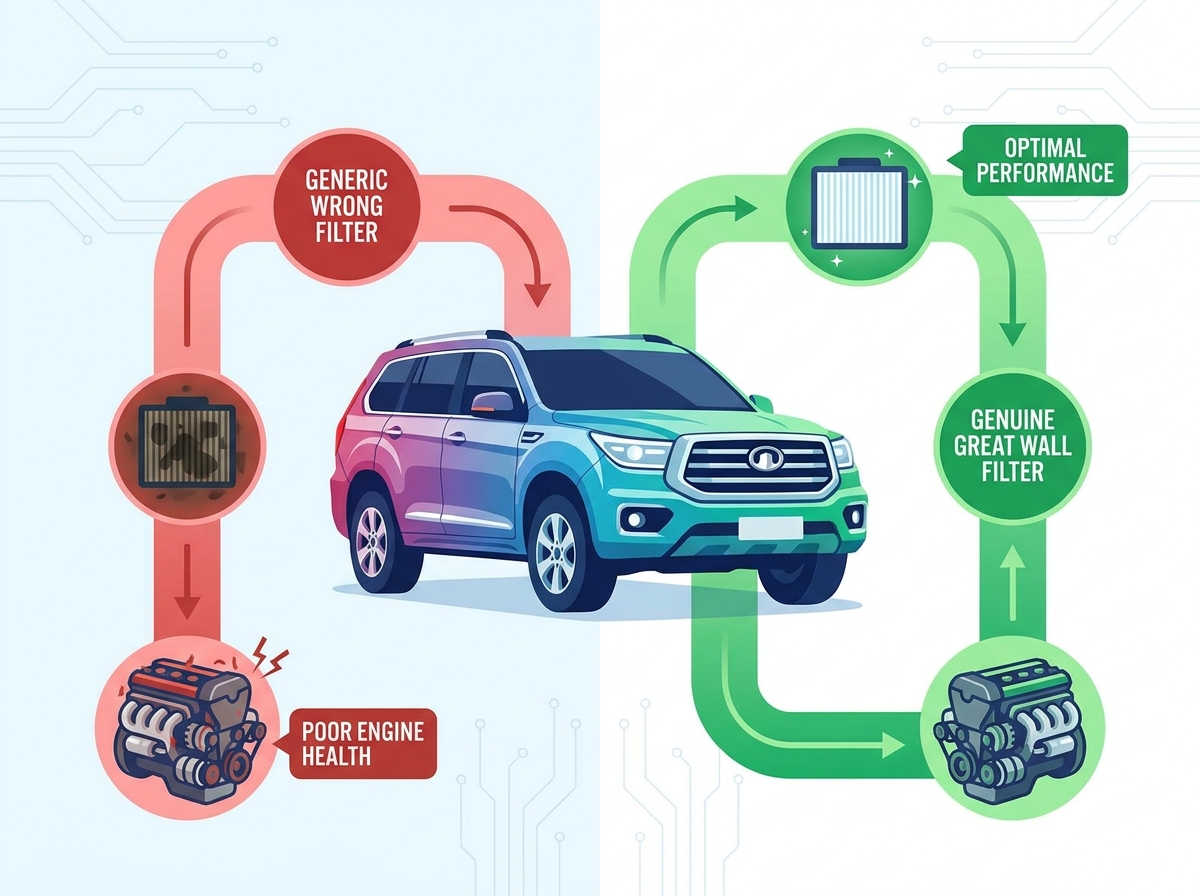
Finding accurate replacement parts for imported platforms requires precision. Models like the GWM Ute/Cannon, Haval H6, and Tank series present specific cataloging challenges. Rapid platform updates in GWM vehicles can lead to mid-year airbox redesigns. A filter that fits a 2021 model might not fit a late-2022 model due to a minor housing change.
Generic aftermarket catalogs often fail to track these mid-year production changes. Relying on a basic auto parts store database might result in purchasing a unit that is slightly too thick or has the wrong seal profile. If the airbox lid requires excessive force to clamp down, the filter is the wrong size. Forcing it will warp the housing and cause massive vacuum leaks.
To verify fitment accurately, start with the owner's manual to locate the factory part number. Use manufacturer-direct cross-reference tools and digital VIN selectors to find the exact matching Air Filter for Great Wall Motor. Do not guess based on visual similarity.
Cross-referencing the physical dimensions (length, width, and pleat depth) against the manufacturer's technical data sheet provides a secondary layer of verification before installation. Measure the old filter with calipers if you are unsure. Precision here prevents engine destruction later.
GWM vehicles operating in extreme environments, such as construction sites or remote unpaved tracks, demand heavy-duty solutions. Standard cellulose media will blind over rapidly in fine silica dust. Once the paper is clogged, the engine pulls harder on the intake tract, which can suck the filter media right out of its frame.
Upgrading to high-dust-holding capacity synthetic filters is highly recommended. Implementing pre-filters or snorkel socks adds a sacrificial layer that catches heavy particulates before they reach the main airbox. You can pull a snorkel sock off, shake it out, and keep driving, drastically extending the primary media's lifespan in the bush.
Vehicle owners often worry about voiding their factory warranty when using non-OEM parts. Regional regulations generally protect consumers who choose aftermarket replacements, provided the parts meet factory specifications. Dealerships cannot legally void your entire powertrain warranty simply because you used a Wix or Ryco filter.
While using an aftermarket unit will not automatically void a warranty, engine damage caused directly by a poorly fitted or over-oiled filter will not be covered. If the dealership finds silica dust in the intake tube and a deformed aftermarket filter in the box, you will pay for the engine rebuild out of pocket. Proper installation and adherence to maintenance schedules remain the owner's responsibility.
The most critical failure point is incorrect fitment. If a filter is too small or the polyurethane seal is rigid or deformed, unfiltered air bypasses the media entirely. This is known as "dusting" an engine. It happens silently and destroys motors rapidly.
When abrasive dust bypasses the seal, it enters the intake tract, sandblasting the turbocharger compressor wheel and scoring the cylinder walls. This leads to catastrophic loss of compression, increased oil consumption, and eventual engine failure. You will notice a sudden drop in power and blue smoke from the exhaust as oil blows past the ruined piston rings.
Oiled reusable filters present a specific risk during maintenance: over-oiling. If too much suspension oil is applied after cleaning, the intake vacuum pulls the excess oil off the cotton mesh and deposits it onto the hot-wire Mass Airflow (MAF) sensor located just downstream of the airbox.
A contaminated MAF sensor provides erratic air/fuel mixture readings to the ECU. This triggers check engine lights, causes hesitation during acceleration, and can result in poor transmission shifting behavior. Mechanics fix this by removing the sensor and spraying it with a dedicated MAF cleaner, but preventing the issue by applying oil sparingly is the better approach.
Relying solely on mileage schedules is inadequate. Physical inspection dictates replacement timing. Check for pleat deformation, deep-layer graying, and seal degradation. A slightly dirty surface does not always mean the unit is restricted. Surface dust is normal and actually helps trap finer particles.
Hold the media up to a strong light source; if no light passes through, it is fully loaded. Additionally, check the airbox restriction indicator if your vehicle is equipped with one. This gauge measures intake vacuum and provides an accurate reading of filter life. When the yellow indicator hits the red zone, swap the filter immediately.
The strict "every 15,000 miles" rule is a baseline, not a mandate. Replacement intervals must be conditional based on the operating environment. Blindly following the manual can leave you with a choked engine or cause you to throw away perfectly good parts.
Inspect the intake system every 10,000 miles. Vehicles used in agriculture, mining, or frequent dirt road travel may require replacement every 5,000 miles. Conversely, a vehicle driven exclusively on clean highways might easily exceed 20,000 miles before restriction becomes an issue. Let the physical condition of the media dictate your maintenance schedule.
| Symptom | Potential Cause | Required Action |
|---|---|---|
| Dust inside intake tube | Filter seal failure / Bypass | Replace filter, clean intake, check oil for contamination |
| Check Engine Light (Lean Code) | MAF sensor coated in filter oil | Clean MAF sensor, blot excess oil from filter |
| Media pulled out of frame | Severe restriction / Water damage | Replace filter immediately, check for water ingress |
| Musty smell from AC vents | Clogged or moldy cabin filter | Replace cabin filter with activated carbon unit |
A: The baseline recommendation is between 15,000 and 30,000 miles. However, this is heavily dependent on environmental factors. Vehicles driven on dirt roads, in heavy construction zones, or during high pollen seasons may require replacement as early as 5,000 to 10,000 miles. Always inspect the filter visually rather than relying solely on the odometer.
A: Modern engine control units automatically adjust fuel trims based on airflow. While throttle response may marginally improve due to lower initial restriction, significant horsepower or MPG gains from a drop-in filter alone are negligible without further ECU tuning or exhaust modifications. You are buying them for reusability, not massive power gains.
A: Standard cabin filters block larger dust, leaves, and debris. HEPA filters utilize dense synthetic glass fibers to capture 99.97% of microscopic particles down to 0.3 microns. This makes HEPA superior for allergy sufferers and blocking fine exhaust soot in heavy traffic.
A: We strongly advise against this. High-pressure compressed air tears the microscopic cellulose fibers. This destroys the filtration efficiency, allowing fine silica dust to bypass the media and enter the engine, even if the filter looks visually clean. Paper filters are strictly disposable.
A: Use the vehicle's VIN number at a dealership or cross-reference the stamped OEM part number on your old filter directly with premium aftermarket manufacturers' digital databases. Do not rely on generic auto parts store catalogs, as they often miss mid-year production changes.
A: ISO 5011 is the global testing standard for machinery and automotive air intake systems. It measures filtration efficiency, initial air restriction, and total dust-holding capacity under strict laboratory-controlled conditions, providing a factual baseline for performance rather than marketing claims.
A: If the filter is too small or the seal is deformed, unfiltered air bypasses the media. This leads to silica ingestion, which accelerates oil degradation, sandblasts turbocharger blades, and causes permanent internal engine scoring on cylinder walls. This will eventually require a complete engine rebuild.


