


Views: 0 Author: Site Editor Publish Time: 2026-08-01 Origin: Site


While brake pads are a universal automotive component, sourcing and selecting the correct friction material for specific Chery models is a strict requirement for maintaining factory safety standards and driving comfort. Whether you drive a Tiggo SUV or an Arrizo sedan, matching the pad to the vehicle ensures the braking system operates exactly as the engineers intended. The aftermarket is currently saturated with generic brake components that promise high performance but fail to deliver under real-world conditions. Choosing an incompatible or substandard Brake Pad for Chery vehicles often leads to accelerated rotor wear, excessive NVH (Noise, Vibration, and Harshness), and compromised emergency stopping distances. This guide breaks down the technical evaluation criteria for selecting a high-quality friction material. We will compare material types, evaluate OEM versus aftermarket options, and outline essential installation protocols to keep your vehicle operating safely.
Matching pad dimensions precisely to Chery's proprietary caliper designs forms the foundation of brake system safety. A pad that is even a fraction of a millimeter off specification will not seat correctly in the caliper bracket. Poor tolerance in generic aftermarket pads causes pad shifting during engagement. This shifting creates audible clicking noises when you apply the pedal and leads to highly uneven wear across the friction surface. You must verify the backing plate dimensions match the factory hardware perfectly. When installing new components, the pad ears should slide into the abutment clips with minimal resistance but without excessive play. If you have to force the pad into the bracket with a hammer, the dimensions are wrong, and the pad will bind, causing the brakes to drag and overheat.
To ensure proper fitment, mechanics follow a specific verification process before installation:
Brake fade occurs when friction materials exceed their maximum operating temperature. The resin binding the pad together begins to outgas, creating a boundary layer of gas that prevents the pad from gripping the rotor. The weight of Chery SUVs, like the Tiggo 7 or 8 Pro, generates immense heat during continuous braking, especially on long descents. A quality pad must withstand baseline operating temperatures of at least 300 to 400 degrees Celsius without losing its friction coefficient. When the friction coefficient drops, the driver experiences a hard pedal with significantly reduced stopping power. Upgraded pads utilize advanced curing processes, such as positive molding, to burn off excess resins at the factory, reducing the likelihood of green fade during the initial use phase.
Passenger comfort relies heavily on strict NVH control. Modern pad structures utilize specific shim designs, chamfered edges, and center slots to mitigate squealing and vibration. The shim acts as a dampener between the caliper piston and the steel backing plate, absorbing the high-frequency vibrations that manifest as brake squeal. Chamfers prevent the leading edge of the pad from digging into the rotor, smoothing the initial engagement. Center slots provide an escape route for brake dust and outgassing resins, preventing the pad from hydroplaning on its own debris. We view NVH as a primary indicator of component harmony and overall manufacturing quality. If a pad lacks these physical features, it will likely produce unacceptable noise levels on a modern Chery vehicle.
Ceramic pads consist of dense ceramic fibers mixed with non-ferrous filler materials. They serve as the standard for modern urban commuting. The objective benefits include exceptionally low brake dust, quiet operation, and an extended lifespan. Ceramic materials are gentle on rotors, meaning you will likely get more mileage out of your brake discs before they require replacement. The trade-offs involve a higher upfront cost and slightly less initial bite in extreme cold weather compared to metallic alternatives. For a Chery Arrizo driven primarily in stop-and-go city traffic, ceramic compounds provide the best balance of longevity and comfort, keeping the wheels clean and the stops silent.
Semi-metallic pads contain 30 to 70 percent metals, including steel, iron, or copper wool. This dense metallic composition provides superior heat dissipation, pulling thermal energy away from the rotor face. They deliver aggressive stopping power and excellent resistance to brake fade under heavy loads. If you frequently drive a fully loaded Tiggo 8 Pro in mountainous terrain, these are highly effective. The trade-offs include increased rotor wear, higher dust output, and the potential for more operational noise. The metallic fibers act like mild abrasives against the cast iron rotor, which improves stopping distance but accelerates component wear.
NAO pads use organic materials like glass, rubber, and Kevlar resins. They are generally quieter and softer on rotors than semi-metallics. However, they wear out significantly faster and create more visible black dust. NAO pads are acceptable for lighter, older vehicles driven gently. You should avoid them for heavier Chery models, as they cannot handle the thermal load generated by a heavy SUV stopping from highway speeds. Under extreme heat, NAO pads degrade rapidly, leading to a spongy pedal and increased stopping distances.
Selecting the right compound requires matching the material to your driving habits and vehicle weight. Using the wrong material for your specific application will result in premature failure or unacceptable noise levels.
| Chery Model / Driving Style | Recommended Material | Primary Benefit | Expected Lifespan |
|---|---|---|---|
| Arrizo Sedan (Urban Commuting) | Ceramic | Low dust, silent operation, gentle on rotors. | 50,000 - 70,000 km |
| Tiggo 4 Pro (Mixed Highway/City) | Ceramic or Premium NAO | Balanced comfort and stopping power. | 40,000 - 60,000 km |
| Tiggo 8 Pro (Heavy Loads/Mountains) | Semi-Metallic | High fade resistance, aggressive bite. | 30,000 - 50,000 km |
| Tiggo 7 Pro (Aggressive Highway) | Premium Ceramic | Stable friction coefficient at high speeds. | 45,000 - 65,000 km |
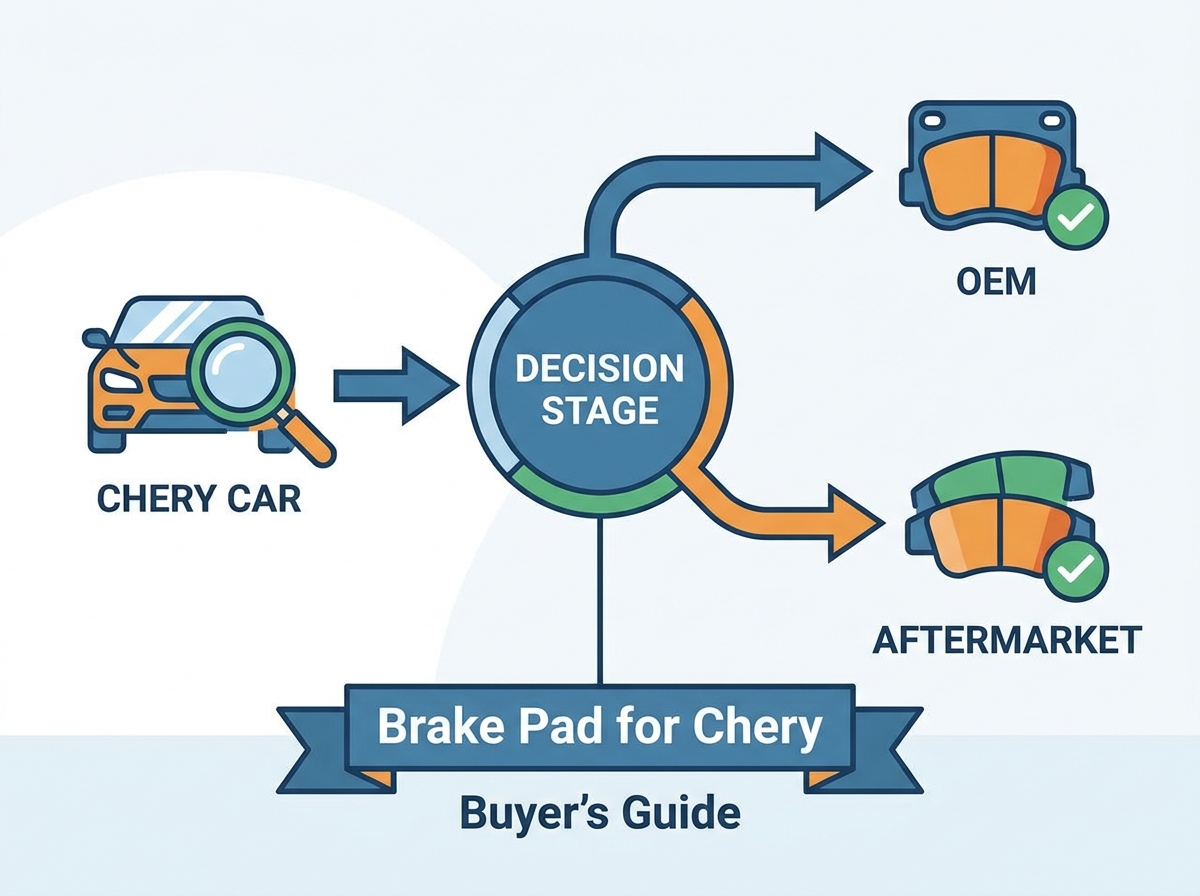
OEM stands for Original Equipment Manufacturer. These are the exact parts installed on the assembly line in the Chery factory. Genuine Chery OEM pads offer complete predictability. They guarantee an exact fit, meet all baseline safety compliance standards, and preserve your factory warranties. When you choose OEM, you eliminate the guesswork regarding friction coefficients and hardware compatibility. The manufacturer has already spent millions on research and development to ensure that specific pad compound works perfectly with the vehicle's master cylinder and ABS programming. For most drivers, sticking with OEM parts is the safest and most reliable route.
Top-tier aftermarket brands can sometimes exceed OEM specifications in specific areas. Brands like Wagner, Bosch, or Brembo engineer pads for lower dust or higher heat tolerance. You must verify aftermarket certifications before purchasing. Look for ECE R90 compliance. This European standard ensures the aftermarket pad performs within 15 percent of the original factory part in terms of cold performance, speed sensitivity, and friction behavior. Premium aftermarket pads often come with upgraded hardware kits, including rubberized shims and stainless steel abutment clips, which can improve the overall installation quality.
White-label pads with unverified friction coefficients present a severe safety risk. They often lack proper testing and quality control. The binding resins can fail under high heat, leading to catastrophic brake fade. Saving money on cheap pads often results in destroying more expensive brake rotors. The backing plates on budget pads are frequently stamped from low-grade steel, which can bend under the pressure of the caliper pistons. This bending causes the friction material to crack and separate from the plate, leading to sudden and complete brake failure. The long-term implications always outweigh the short-term savings.
Most pads feature a soft-metal wear indicator tang attached to the base of the backing plate. As the friction material thins, this metal tab eventually contacts the spinning rotor. The resulting high-pitched squeal is an intentional design feature. It is not a defect. It serves as a reliable mechanical alert that replacement is due immediately. This noise will typically occur while you are driving and may disappear when you apply the brakes, as the caliper clamps down and changes the vibration frequency. Ignoring this sound will eventually lead to the backing plate grinding against the rotor.
Modern electronic systems actively manage braking forces. The Chery Tiggo series utilizes Electronic Parking Brakes, Hill Descent Control, and Electronic Brakeforce Distribution. These systems apply the rear brakes automatically to stabilize the vehicle during cornering or to prevent rollback on inclines. Because of this active intervention, rear brake pads on these models may wear out faster than expected compared to older vehicles without these safety suites. Mechanics frequently see Tiggo models where the rear pads require replacement before the fronts, which contradicts traditional braking wear patterns. You must use a diagnostic scan tool to retract the EPB actuator before attempting to replace rear pads on these vehicles.
The brake fluid level in the master cylinder reservoir drops naturally over time. As the friction material thins, the caliper pistons push further out to compensate for the lost thickness. This draws fluid down from the reservoir into the brake lines. A low fluid level often indicates worn pads. Never top off the brake fluid without checking pad thickness first. Doing so can lead to reservoir overflow when you eventually compress the pistons during a pad replacement. The fluid level is designed to act as a visual gauge for pad life; if it hits the "MIN" line, it is time to pull the wheels and inspect the friction material.
You can often conduct a visual check through the wheel spokes using a flashlight. Look at the pad where it rests against the rotor. The industry-standard minimum thickness threshold is typically 3mm. Once the pad reaches this thickness, mandatory replacement is required. Waiting longer risks metal-on-metal contact, which will destroy the rotor. For a more accurate measurement, you must remove the wheel and use a brake pad thickness gauge. Measure both the inner and outer pads, as a sticking caliper slide pin can cause the inner pad to wear down to the metal while the outer pad looks brand new.
Secondary indicators of failure require your immediate attention. A spongy brake pedal suggests fluid issues or severe pad degradation. Increased stopping distances mean the friction coefficient has dropped. Steering wheel vibration during braking is highly indicative of rotor warping or Disc Thickness Variation. Pulling to one side indicates uneven pad wear, a sticking caliper pin, or a collapsed brake hose. If you experience any of these symptoms, the vehicle requires an immediate inspection on a lift.
| Symptom | Probable Cause | Required Action |
|---|---|---|
| High-pitched squeal while driving | Wear indicator contacting rotor | Replace pads immediately. |
| Steering wheel vibration when braking | Disc Thickness Variation (DTV) | Measure rotor runout; machine or replace rotors. |
| Vehicle pulls to one side during stops | Sticking caliper slide pin or uneven pad wear | Service calipers, lubricate pins, replace pads. |
| Spongy or low brake pedal | Overheated pads (gas fade) or fluid degradation | Inspect pad material; flush brake fluid. |
New brake pads require a strict bedding-in process. The physics of bedding-in involves transferring an even, microscopic layer of friction material to the rotor face. You must follow a 500-kilometer run-in rule. Avoid sudden, aggressive braking and high-speed panic stops during this period. Overheating new pads immediately causes the resins to glaze, permanently ruining their stopping power. A glazed pad will squeal constantly and provide poor bite.
To properly bed in new components, follow this procedure in a safe environment:
Never perform a "pad slap." Replacing pads without checking the rotors is a critical error. Inspect the rotor for deep scoring, heat spots, or a pronounced outer lip. Disc Thickness Variation (DTV) occurs when the rotor wears unevenly. Installing flat new pads against grooved or warped rotors will immediately compromise the lifespan and performance of the new components. The new pad will only contact the high spots on the rotor, leading to localized overheating and severe vibration. Always measure rotor thickness with a micrometer to ensure it is above the minimum discard specification stamped on the rotor hat.
Brake hardware loses its tension over time due to extreme heat cycles. You must replace the abutment clips and anti-rattle hardware with every pad change. Reusing old, fatigued clips allows the pad to shift and rattle inside the bracket. Furthermore, you must clean and lubricate the caliper slide pins. Remove the old grease, inspect the rubber boots for tears, and apply high-temp silicone brake grease to the pins to ensure even pad engagement and retraction. Stuck pins cause the inner pad to drag and wear out prematurely, while petroleum-based greases will cause the rubber boots to swell and fail.
A: Brake pad lifespan varies based on driving habits and environment. Front pads on a Chery Tiggo generally last between 40,000 and 60,000 kilometers. Rear pads may wear faster if the vehicle frequently utilizes Electronic Brakeforce Distribution and Electronic Parking Brake systems in heavy stop-and-go traffic.
A: Squeaking immediately after installation usually indicates a lack of proper lubrication on the backing plates or failure to replace the anti-rattle hardware. It can also occur if the pads were not bedded in correctly, causing the surface material to glaze. Ensure all contact points are greased with high-temp silicone.
A: Yes, you can replace just the front or just the rear pads, as they wear at different rates. The front brakes handle roughly 70 percent of the vehicle's stopping power and typically require more frequent replacement. Always replace pads in complete axle sets.
A: OEM pads are branded by the vehicle manufacturer and sold at dealerships. OES pads are made by the exact same factory that produced the OEM part, but they are sold under the manufacturer's own brand name, often at a lower price.
A: It is not always necessary to machine rotors, but they must be thoroughly inspected. If the rotor has deep grooves, a prominent rust lip, or exhibits Disc Thickness Variation, it must be machined or replaced to ensure the new pads seat correctly.


